Order placed
- The lender asks
- Did a vendor accept it?
- The answer lived in
CenterPoint is where lenders are supposed to watch recovery work happen. In practice, status came by email and auction outcomes took a phone call. Title delays arrived with no explanation at all.
When a borrower defaults on a car loan, the lender repossesses the car and sells it at auction. Getting the car and its title ready to sell is post repossession. The sale itself is remarketing.
Banks and credit unions hire Allied Solutions to run that process for them. Allied's own ARM (Asset Recovery Management) specialists do the work.
A lender opens a case in CenterPoint. It lands in Snowflake, the one record of that case. From there it opens a repossession order in RDN, the system repo vendors work from, and a case in ARM Pega.
Pega assigns a repo vendor on its own when the rules allow it.
When no vendor fits, the case waits in a queue until a specialist assigns one by hand.
Vendors report through RDN and AutoIMS, where the auctions are run. Their updates flow into Snowflake, and on to Pega and CenterPoint.
Pega holds everything Allied knows about a case. CenterPoint shows the lender the part they need.
Lenders had built shadow systems to do the job the product was supposed to do.
Outlook folders held active cases.
Excel trackers held everything else, maintained by hand so internal records would match what CenterPoint said.
Some clients exported data on a schedule just to stay current.
“It would be nice to see all of the actions and all of the correspondence in one place… and once it's been resolved, be able to move it out of that pipeline.”
I ran an eleven week discovery sprint with five credit unions. Sessions opened with the client demoing their own workflow before I asked anything, so I watched what people did instead of hearing what they thought they did.
14 sessions with 23 people across the four roles, each recorded and tagged the same day.
I mapped the journey across five phases, from order placed through active repossession, post repossession, remarketing and claims, and found a pain point at every handoff between them.
Status came by email.
Title delays arrived with no explanation.
Auction outcomes took a phone call.
Claims went quiet after filing.
“…all of the actions and all of the correspondence in one place…”
“I don't want to ask. I want to look.”
“If everything is urgent, I stop reading.”
Three decisions shaped the product more than any single finding, and every one of them cost something.
Lenders ask about a case, by its number. A case crosses five teams on its way to closed, and every phase view we sketched rebuilt the handoff gaps the research had just found.
Phase managers lost their at-a-glance list. We gave it back as saved queues, which added a release.
The inbox had already failed as a priority system. When every update is an email, the one that matters looks like the forty that do not.
Nothing could ship until operations agreed what counts as critical. Defining six update tiers took three workshops.
Self-service only works if a lender can judge how fresh a status is without asking. A labelled answer that is slightly stale beat a verified one that arrived tomorrow.
Vendor delays became visible to clients. That was an uncomfortable conversation with our vendor partners, and the right one to have.
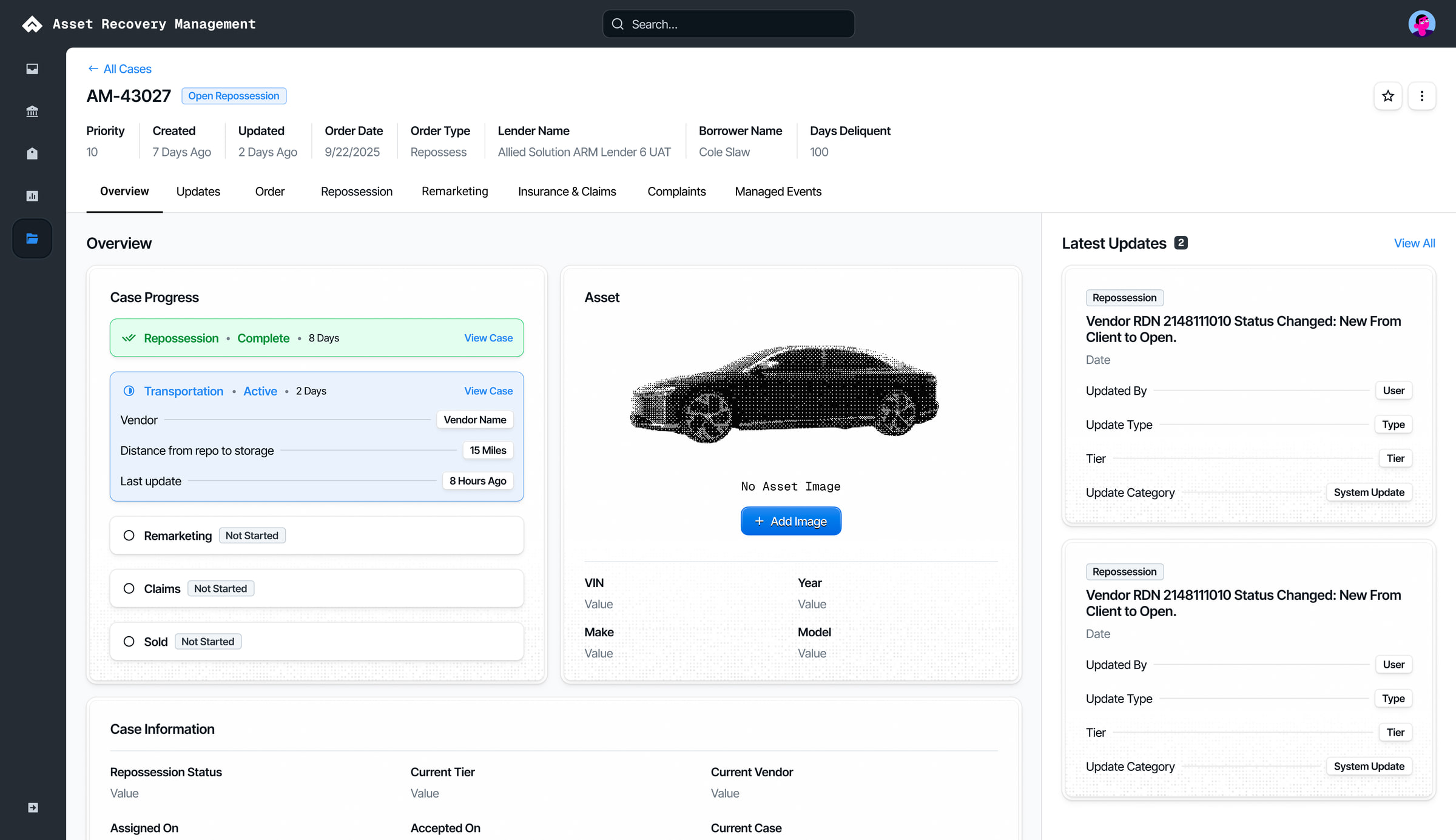
Think of ARM CenterPoint as a little window into Allied for the lenders to see how Allied is doing.
ARM Pega is where Allied's specialists move a case, and it holds everything. CenterPoint shows a lender the part they ask about. Both read the same record.
Open, on hold and closed, with each case's ARM phase and status on its row. The answer lenders were emailing to get is on the first screen.
Every case runs repossession, remarketing, billing, each marked complete, in progress or coming soon. The vendor and the recovery sit under the step they belong to.
Title and auction status, with the dates the car entered AutoIMS, cleared for sale and went on the block. No phone call to the auction desk.
Every event lands on the case: vendor assigned, asset recovered, transported, condition report done. New ones keep a dot until they are read.
Hold, close or redeem from the case header. Each opens a short form that goes to Allied for review.
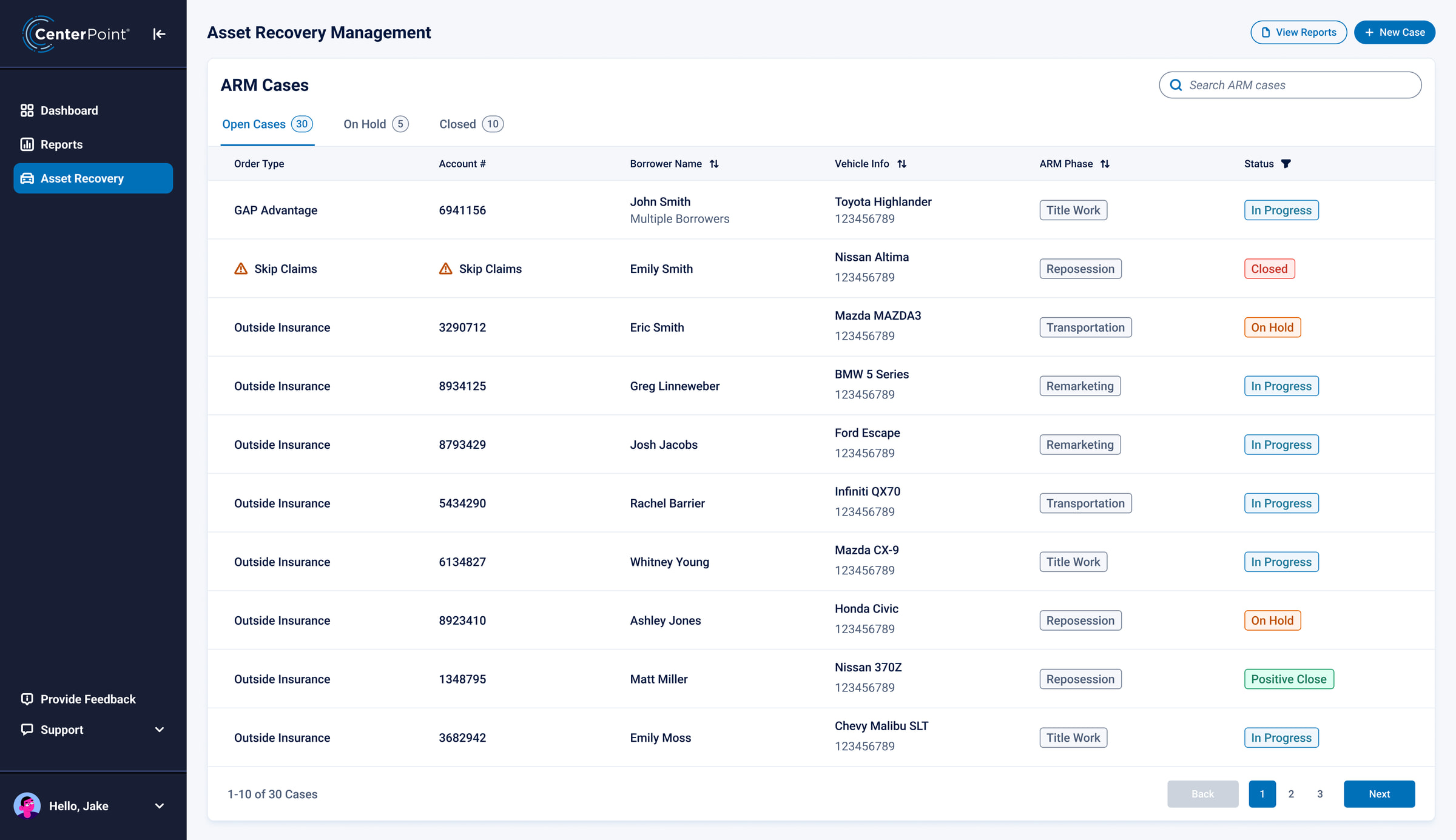
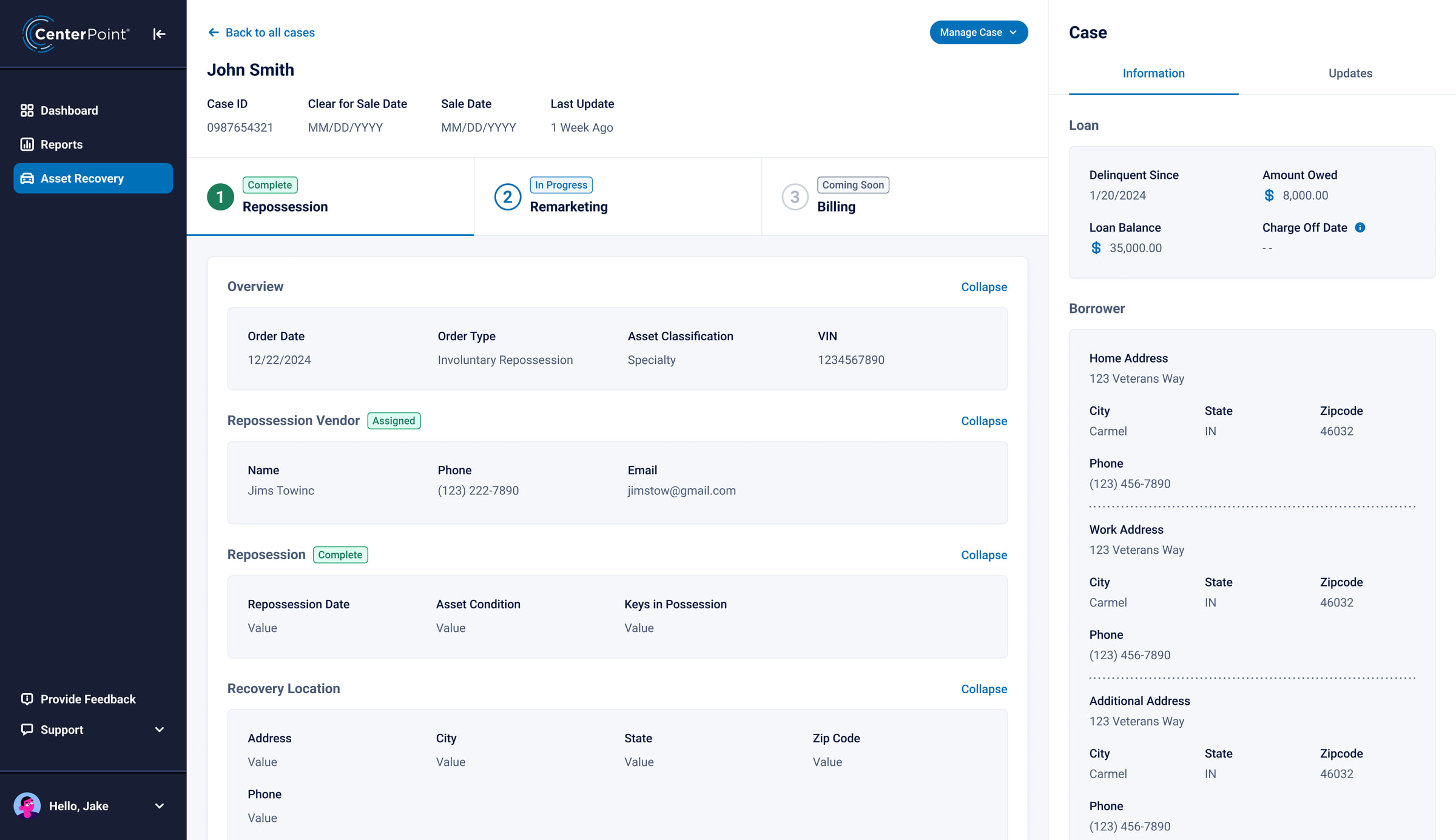
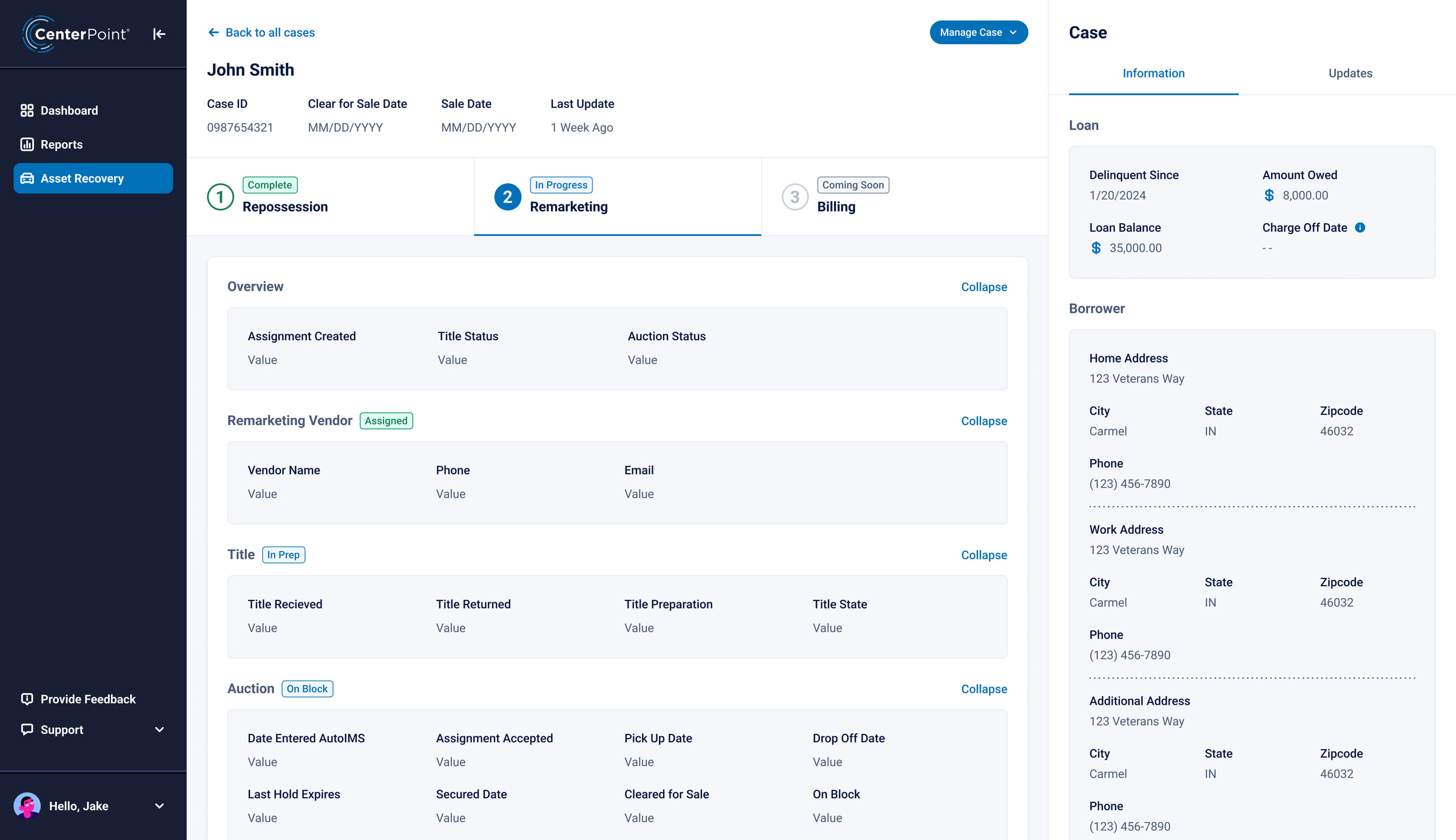
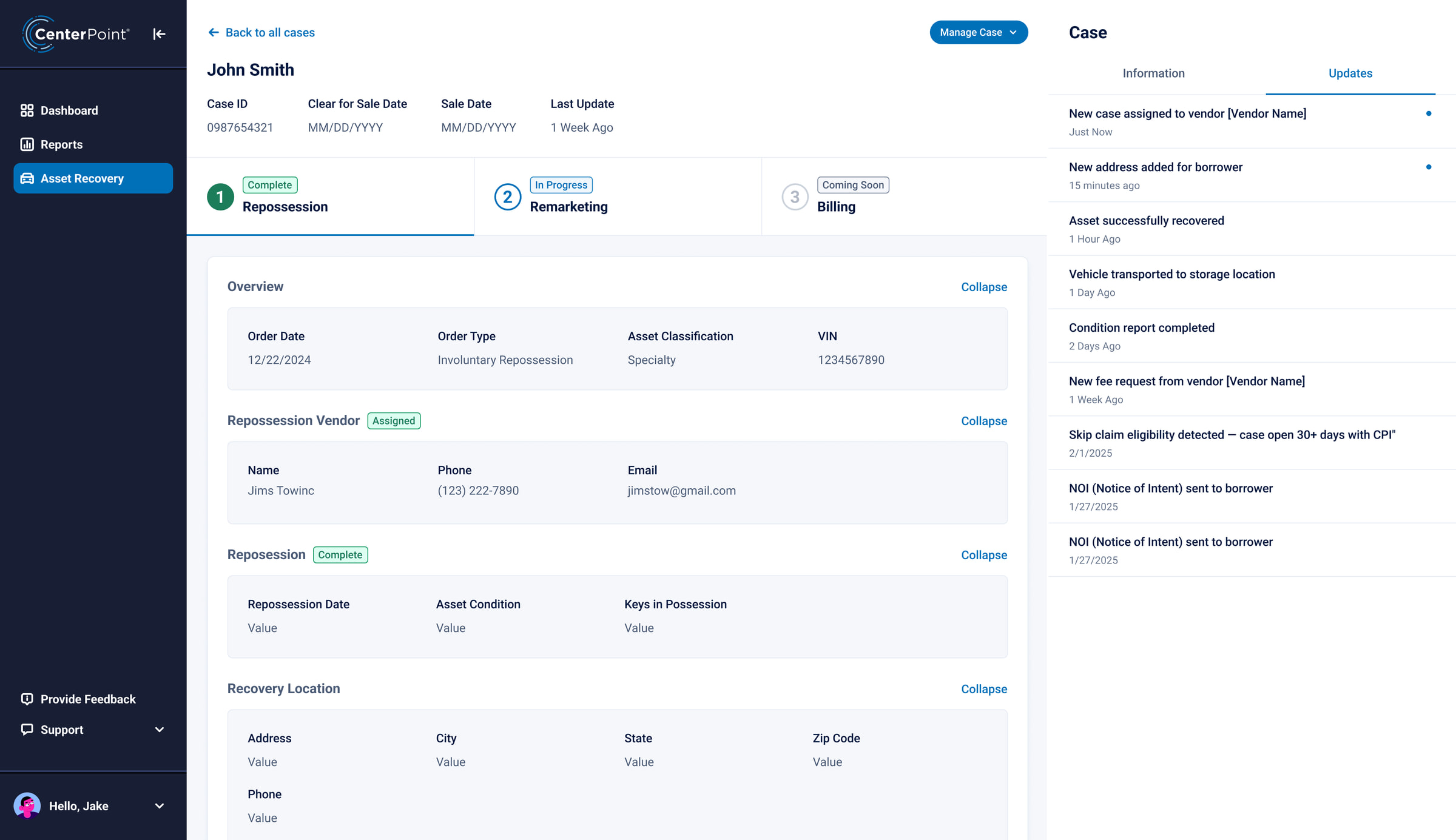
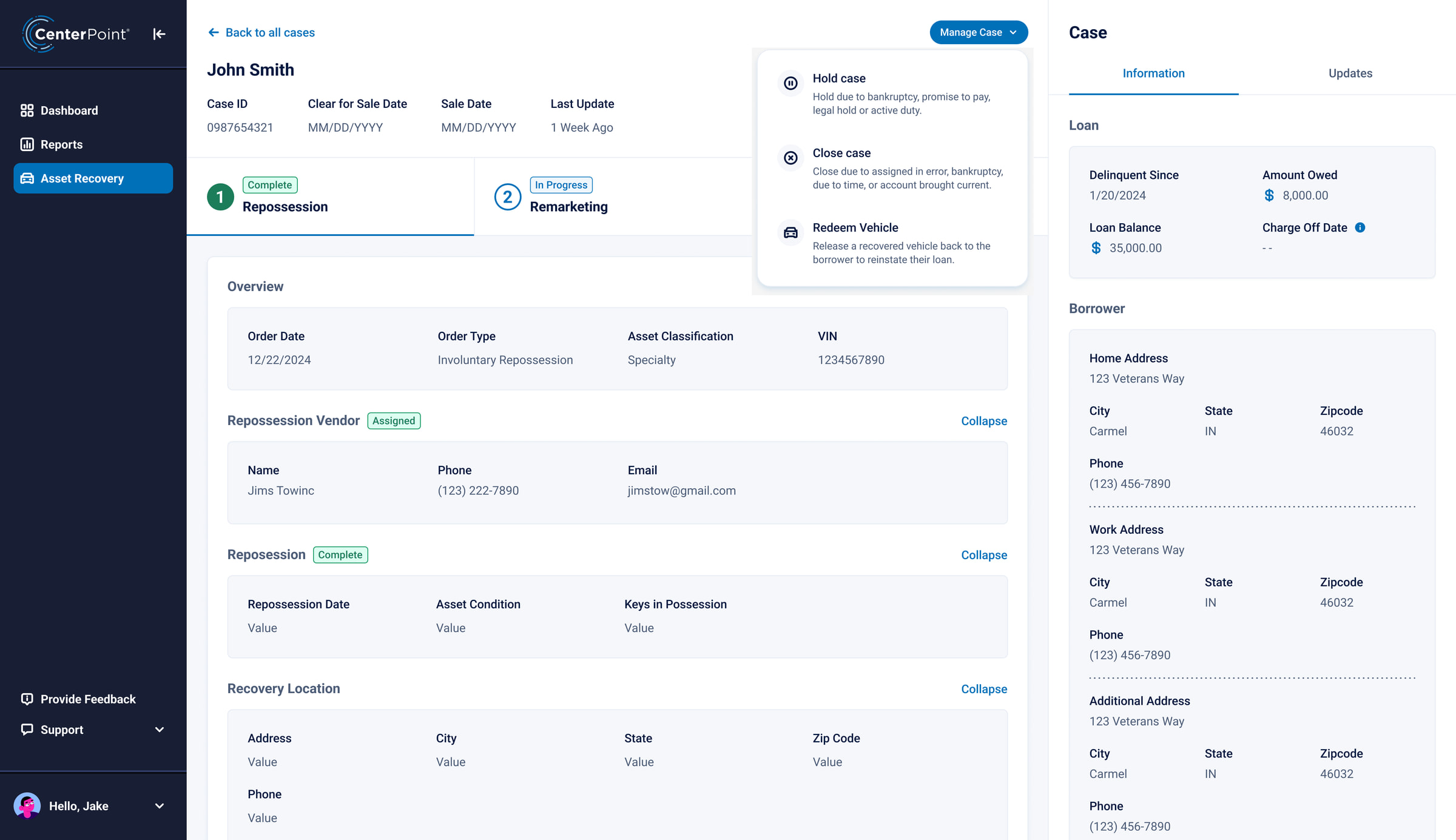
Drag the handle. On the left, how a repo specialist at the lender found the status of a case. On the right, the same case in CenterPoint.
CenterPoint dashboard concept with live case status and auction tracking.
A Maze usability protocol targeting 80% task completion, measured with SUS, SEQ, task time and misclick rate.
“We stopped arguing about whose spreadsheet was right.”