
Furnished Quarters
Getting new users to their
first useful dashboard
CONTEXT
Furnished Quarters supplies furnished short term apartments to companies that move people between cities. A client relocates an engineer to Manhattan for four months. A consulting firm needs eight units in Boston by the following week. Either way, a housing specialist builds a quote, and that quote depends on what is available, what it costs, how long the stay runs, and which building fits the request. The company holds inventory in New York, New Jersey, Boston, Connecticut, and San Francisco, plus partner units in other markets.
The tool the specialists used to build those quotes was years past the point of being useful. Availability lived in one place, pricing in another, property details in a third. A single quote meant several open tabs, numbers copied by hand, and a message to a colleague asking whether a unit was still open. Requests from large corporate accounts came in faster than the team could answer them, and the backlog kept growing while the same people kept doing the same lookups.
APPROACH & OUTCOMES
I joined as lead designer to rebuild FQ Live and the design system under it. I sat with housing specialists while they quoted live requests and mapped the full path from inbound email to sent quote. Then I counted the moments where someone had to leave the tool to find something. Most of the time in a quote was not spent deciding anything. It was spent retrieving information the tool already had and typing it in a second time.
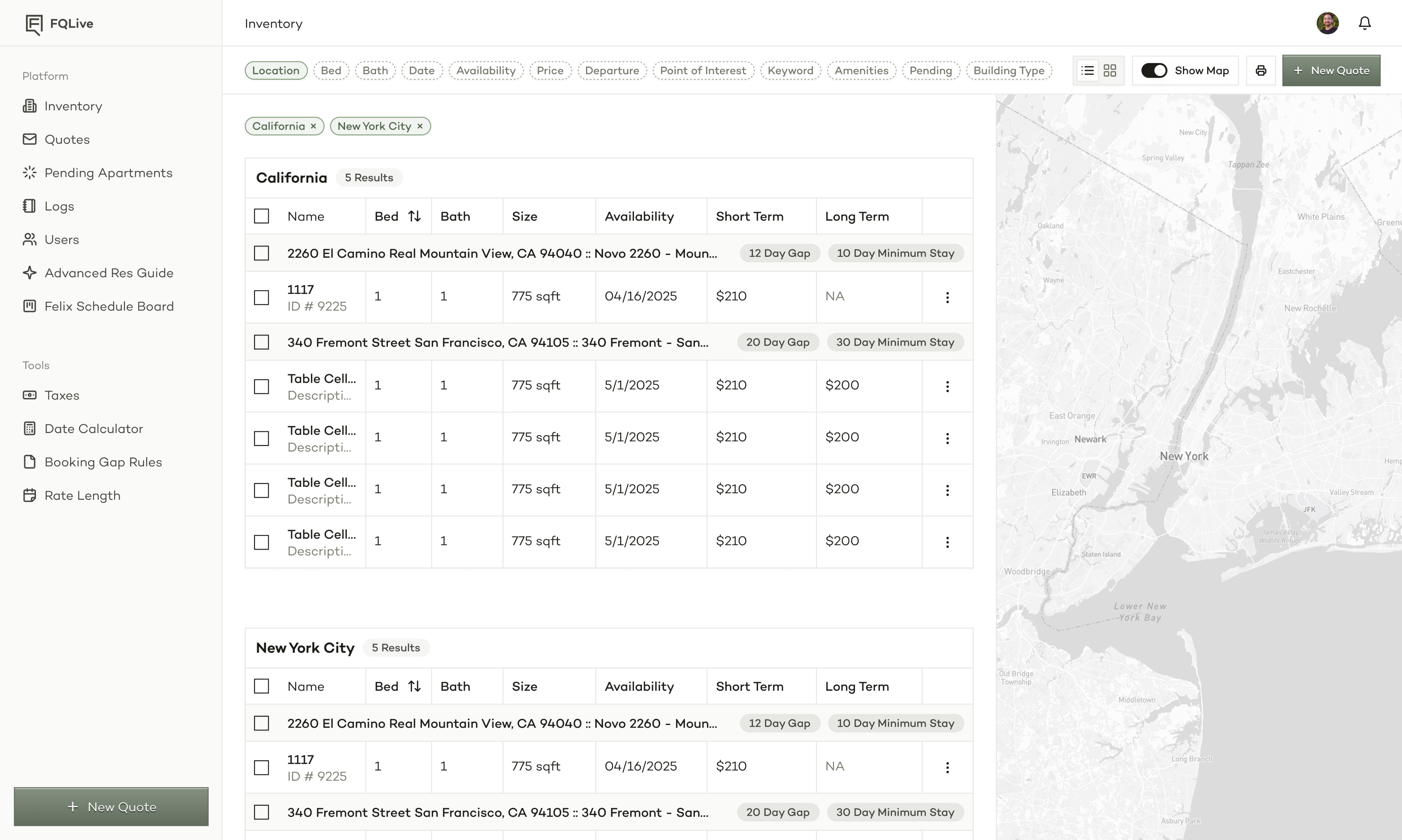
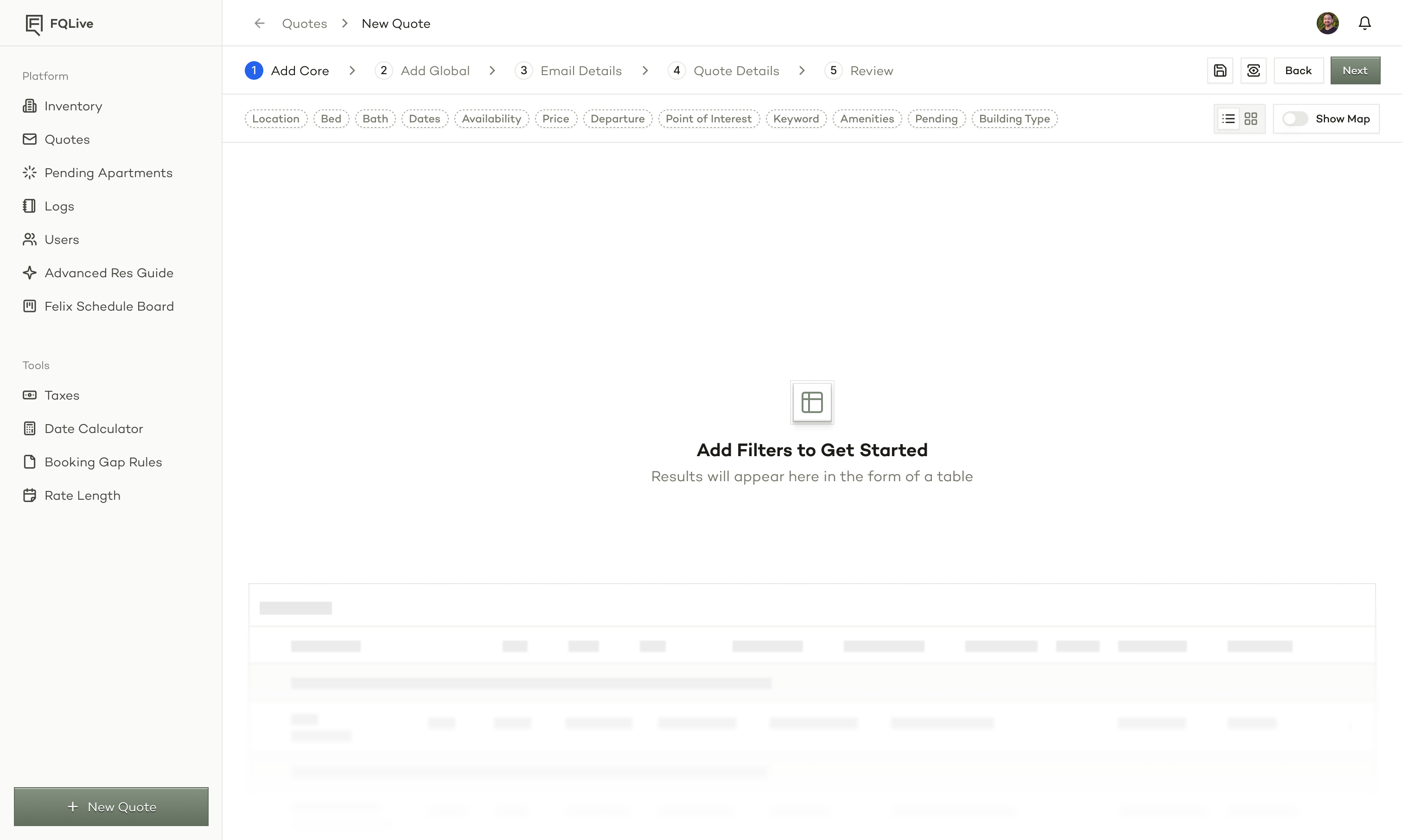
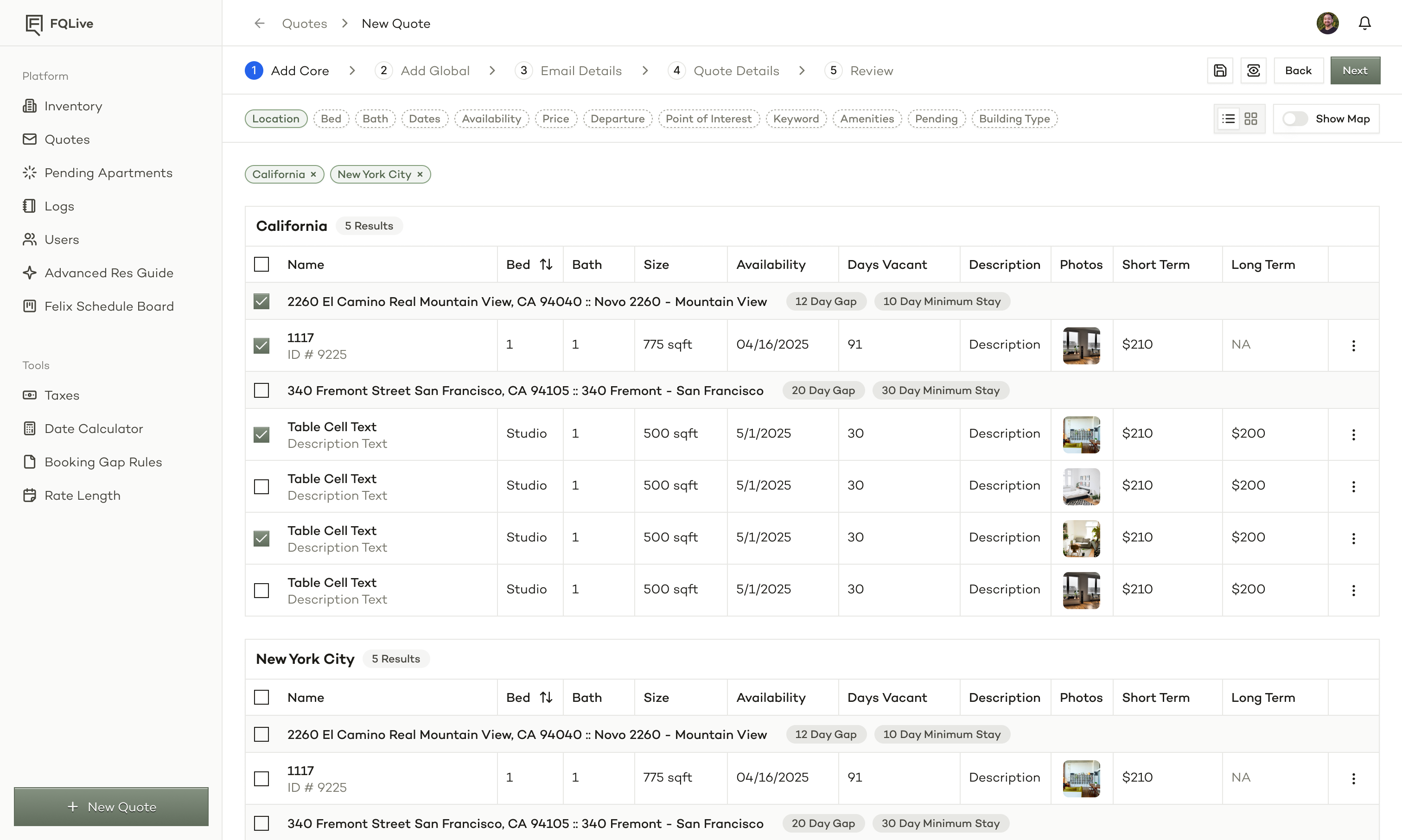
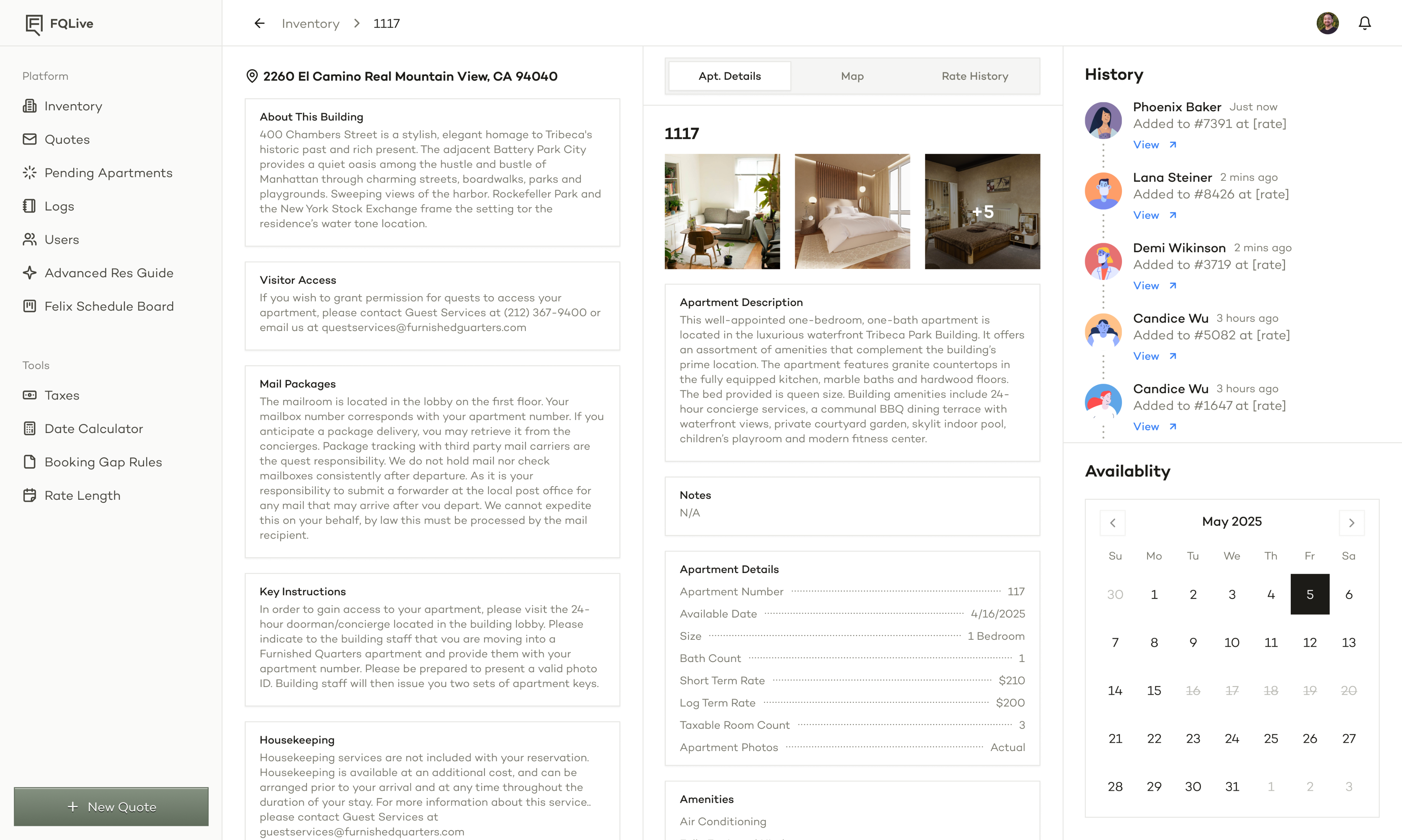
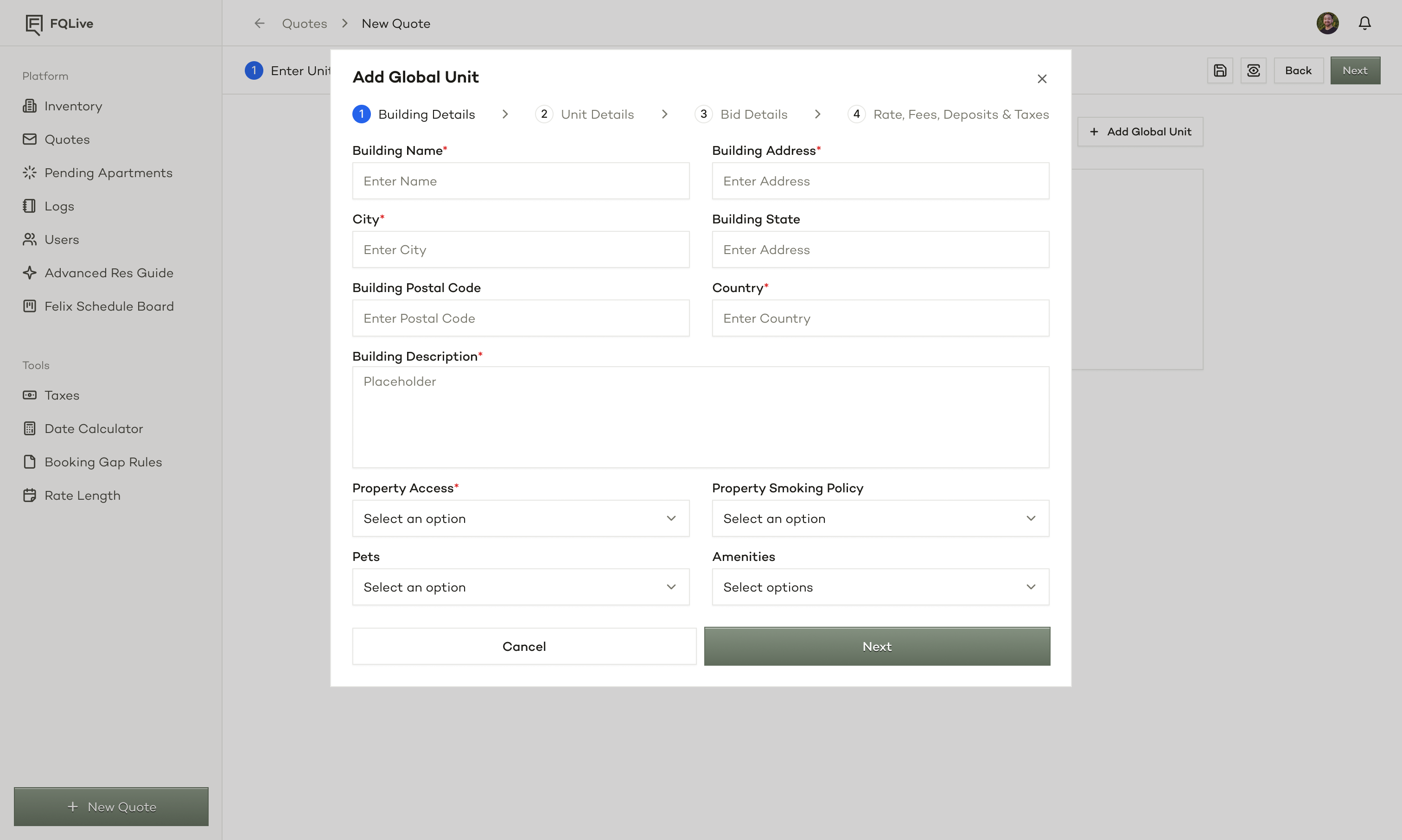
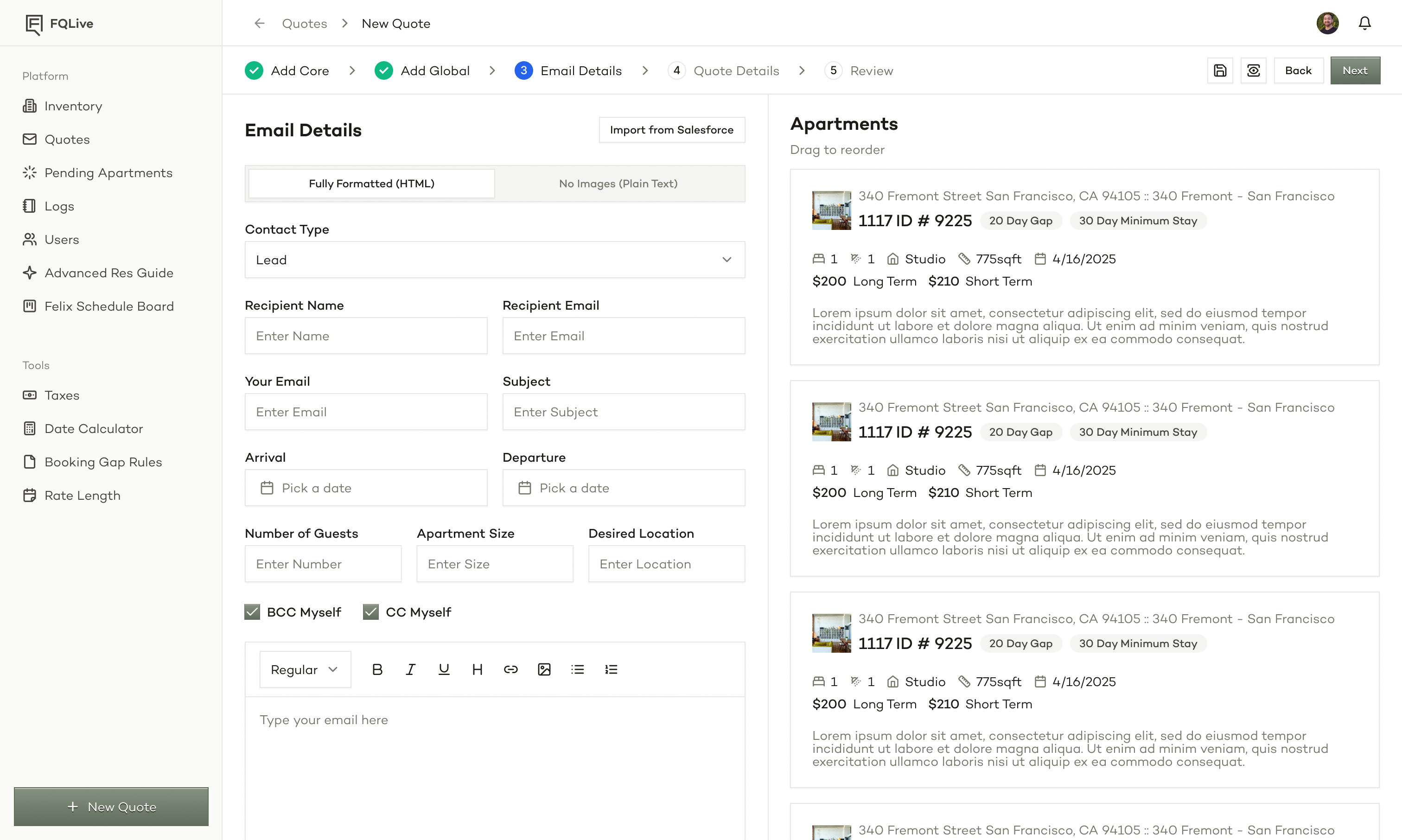
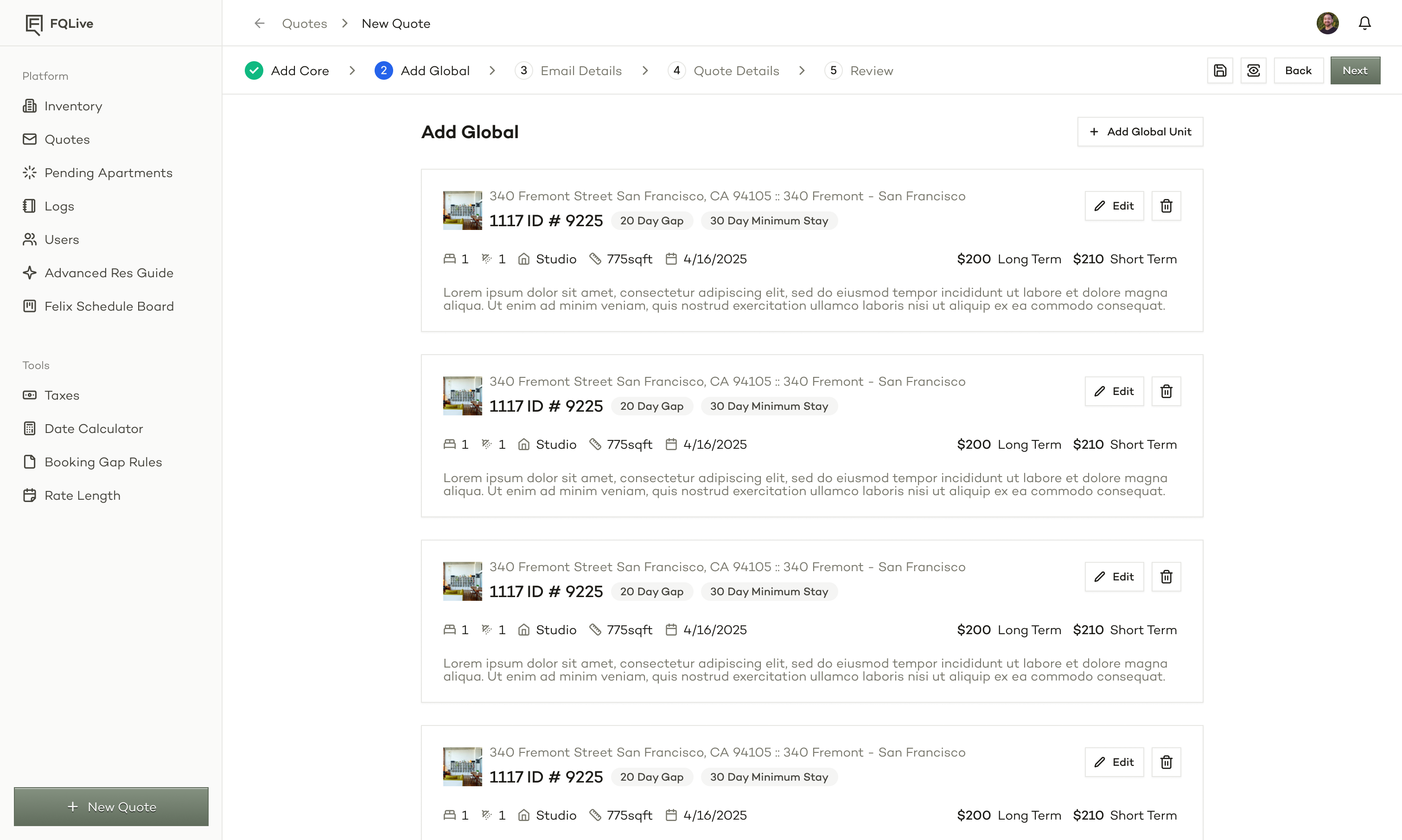
I rebuilt the product around the quote itself. Inventory search and property listings now feed a quote in progress, which lets a specialist add a unit while browsing instead of writing it down and entering it later. Property records hold the details a specialist reads aloud on a call, including photos, layout, building amenities, and pet policy. Pricing recalculates as the stay length and unit mix change, so a client asking what happens if we extend to six months gets an answer during the call.
The design system ran alongside that work. Years of inconsistent patterns had accumulated across the product, and every new screen made a fresh set of decisions about spacing, type, and states. I built the token set and component library with the engineering team, then wrote the usage and governance documentation and handed it to the internal team before my contract ended.
Go back home
Furnished Quarters
Getting new users to their
first useful dashboard
CONTEXT
Furnished Quarters supplies furnished short term apartments to companies that move people between cities. A client relocates an engineer to Manhattan for four months. A consulting firm needs eight units in Boston by the following week. Either way, a housing specialist builds a quote, and that quote depends on what is available, what it costs, how long the stay runs, and which building fits the request. The company holds inventory in New York, New Jersey, Boston, Connecticut, and San Francisco, plus partner units in other markets.
The tool the specialists used to build those quotes was years past the point of being useful. Availability lived in one place, pricing in another, property details in a third. A single quote meant several open tabs, numbers copied by hand, and a message to a colleague asking whether a unit was still open. Requests from large corporate accounts came in faster than the team could answer them, and the backlog kept growing while the same people kept doing the same lookups.
APPROACH & OUTCOMES
I joined as lead designer to rebuild FQ Live and the design system under it. I sat with housing specialists while they quoted live requests and mapped the full path from inbound email to sent quote. Then I counted the moments where someone had to leave the tool to find something. Most of the time in a quote was not spent deciding anything. It was spent retrieving information the tool already had and typing it in a second time.
I rebuilt the product around the quote itself. Inventory search and property listings now feed a quote in progress, which lets a specialist add a unit while browsing instead of writing it down and entering it later. Property records hold the details a specialist reads aloud on a call, including photos, layout, building amenities, and pet policy. Pricing recalculates as the stay length and unit mix change, so a client asking what happens if we extend to six months gets an answer during the call.
The design system ran alongside that work. Years of inconsistent patterns had accumulated across the product, and every new screen made a fresh set of decisions about spacing, type, and states. I built the token set and component library with the engineering team, then wrote the usage and governance documentation and handed it to the internal team before my contract ended.
Go back home
Furnished Quarters
Getting a quote out during the call
CONTEXT
Furnished Quarters supplies furnished short term apartments to companies that move people between cities. A client relocates an engineer to Manhattan for four months. A consulting firm needs eight units in Boston by the following week. Either way, a housing specialist builds a quote, and that quote depends on what is available, what it costs, how long the stay runs, and which building fits the request. The company holds inventory in New York, New Jersey, Boston, Connecticut, and San Francisco, plus partner units in other markets.
The tool the specialists used to build those quotes was years past the point of being useful. Availability lived in one place, pricing in another, property details in a third. A single quote meant several open tabs, numbers copied by hand, and a message to a colleague asking whether a unit was still open. Requests from large corporate accounts came in faster than the team could answer them, and the backlog kept growing while the same people kept doing the same lookups.
APPROACH & OUTCOMES
I joined as lead designer to rebuild FQ Live and the design system under it. I sat with housing specialists while they quoted live requests and mapped the full path from inbound email to sent quote. Then I counted the moments where someone had to leave the tool to find something. Most of the time in a quote was not spent deciding anything. It was spent retrieving information the tool already had and typing it in a second time.
I rebuilt the product around the quote itself. Inventory search and property listings now feed a quote in progress, which lets a specialist add a unit while browsing instead of writing it down and entering it later. Property records hold the details a specialist reads aloud on a call, including photos, layout, building amenities, and pet policy. Pricing recalculates as the stay length and unit mix change, so a client asking what happens if we extend to six months gets an answer during the call.
The design system ran alongside that work. Years of inconsistent patterns had accumulated across the product, and every new screen made a fresh set of decisions about spacing, type, and states. I built the token set and component library with the engineering team, then wrote the usage and governance documentation and handed it to the internal team before my contract ended.
Go back home